Writing the video instead of generating it
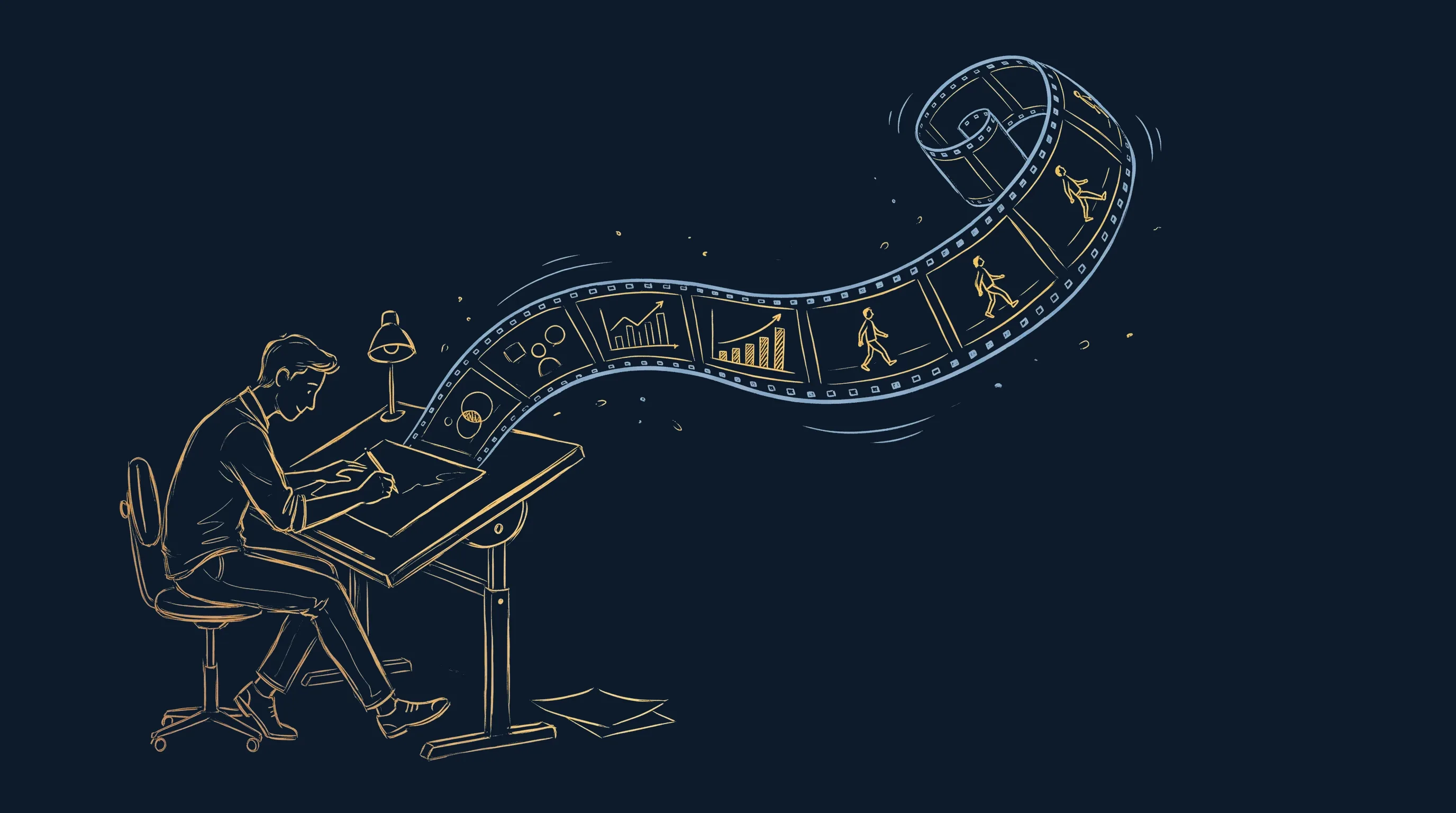
There are 2 ways to make a video with AI today. The first goes through a generation model, such as Seedance or Veo, which produces pixels from a prompt: that's the story I tell in From Nantes to VivaTech. The second has the video written like a web page: text, shapes, charts and interfaces animated in code, then rendered as a film.
For a brand, the second way has 2 advantages. Colors and fonts come from your brand guideline files, so nothing drifts from one scene to the next. And the render comes out identical every time: changing a number or a comma doesn't mean regenerating everything and hoping for the same result.
It covers what a marketing video needs most: a typographic hook, a number that climbs, an interface that fills up, a logo that settles into place. Real footage can fit in too, cut out and placed within the graphics.
The HyperFrames engine
HyperFrames is an open-source tool published by HeyGen under the Apache 2.0 license. It takes animated HTML pages and renders them as MP4 with a headless browser and FFmpeg, the standard tool for encoding video. The render is deterministic: the same page always produces the same video, which lets you fix one scene without touching the others.
It was designed for AI agents. Its commands chain together without any interaction, and it installs in Claude Code as skills. I add its registry of about 450 free elements (animated titles, transitions, charts or backgrounds), which Claude restyles to match my brand guidelines.
What about Claude Motion?
Anthropic offers a similar tool, in beta.
[Claude Motion] turns your content into short animations.
Claude Help Center, Get started with Claude Motion
Like HyperFrames, it writes animations in code instead of generating images, and it exports to MP4. It's reserved for Team and Enterprise plans, and you use it from a conversation or an artifact template.
| Claude Motion | Claude Code and HyperFrames | |
|---|---|---|
| Access | Team and Enterprise plans, in beta | Any paid Claude plan, open-source tool |
| Where it works | In the conversation | In your folders, on your computer |
| Format | Short animations | Long films, live footage included |
| Your brand guidelines | The content you give it | Your brand files, reread at every render |
| Export | MP4 | MP4 |
For a quick animation in a team already on the Team plan, Claude Motion is enough. As soon as the video has to stay true to your guidelines over several minutes and combine live footage with music, I use HyperFrames.
2 videos made this way
A 15-second ad
It promotes my Claude Code training courses. It's written with the colors and fonts of the brand brain from my workshop, logo included, right down to the music, which a script generated.
A 2 min 20 s film for a sales page
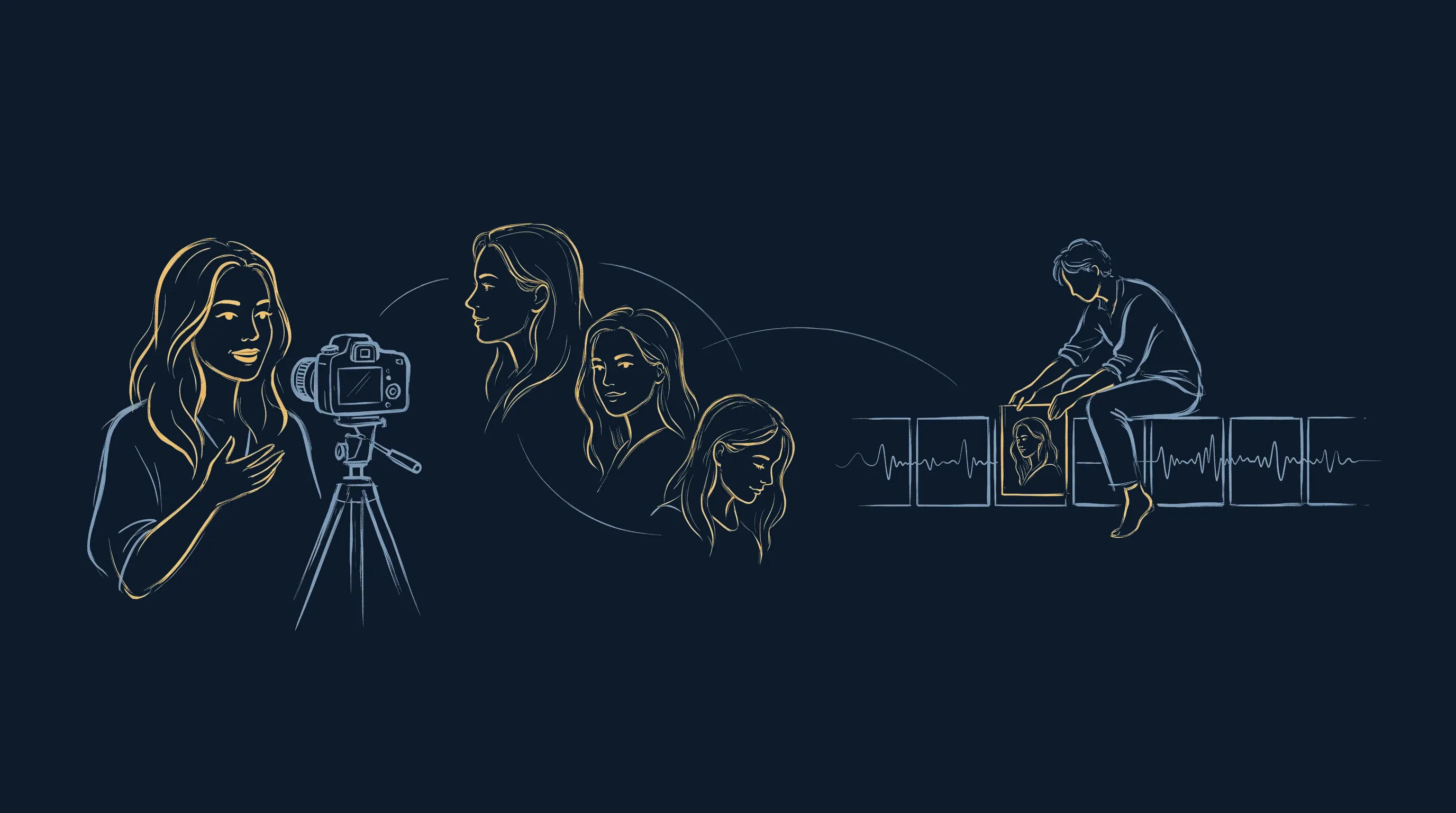
The film that opens the page for my Full stack marketer course mixes a talking-head shot, cut out and placed within the graphics, with motion design scenes: redrawn and animated interfaces, numbers that climb, a training plan that builds itself, tool logos that light up. The music is coded too, and synced to the timeline.
The French version required no paid tools: everything ran on my computer, from the transcription to the music. The English version, the one shown above, added a dubbed voice with ElevenLabs and lip sync with sync.so, for about $18 in credits.
Motion design with Claude Code, step by step
- A goal before an idea: what the video is for and who it's for.
- 3 human approvals before any spending: the concept, the script, then the storyboard.
- Brand guidelines as input: the brand's colors and fonts become the video's style sheet.
- One scene per file: Claude writes each scene in animated HTML, which you watch in the browser before rendering.
- Sound written too: coded music and sound effects, timed to the words and gestures.
- A measured check: a script measures the render and produces a contact sheet, then a reviewer agent checks the film against the brief and the brand, as described in my 10 marketing agents.
The final say belongs to your eye and your ear.
Build your own production studio
The next Full stack marketer session: 21 hours to build and run your agents on your own marketing production, with Claude Code.
See the sessionThe sessions are held in French.
The limits
Computing power, first. The film on my training course page took me an afternoon of work, from the brief to the English version. The rest is computation: the cutout and the frame-by-frame render. These steps run while I work on something else, and how long they take depends on the machine. On my 2021 MacBook Pro M1 Pro, they take hours.
For music, Claude relies on measurements, volume and timing, and taste is judged by ear. My first coded music, a drum track, sounded wrong under the voice, and I had it replaced with a more understated background.
HyperFrames assembles and animates. A shot that was never filmed, such as a set or a camera angle, still goes through a generation model: that's the subject of How to edit a video with Claude Code and AI-generated shots.