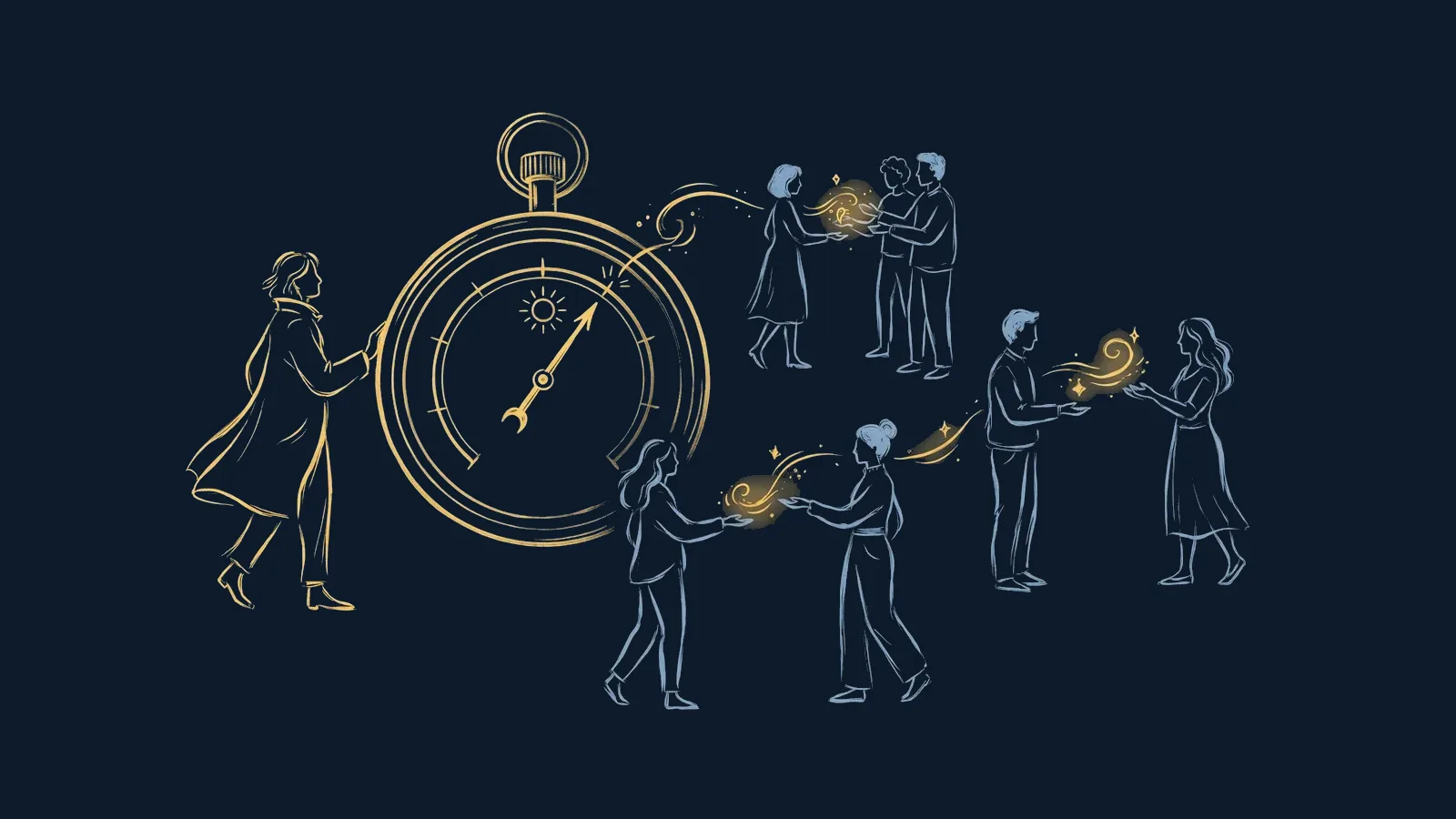
A team that's comfortable with prompting shares what it knows, on one condition: that its hierarchy lets it.
With the Worklab, I set out to measure how much people really use generative AI and what it changes in a team, helping colleagues included. The answers speak to executives as much as to users. Every number in this article comes from the published results of the 2025 edition, method included.
What is the AI at Work Barometer?
It's an annual survey on how people use generative AI at work and what it changes in teams. I run it with the Worklab, a consulting and training firm founded in 2015 in Nantes and specializing in collaborative work, and with Sacha Lopez, its founder.
The questionnaire measures 4 dimensions: prompting skill, behavior at work such as helping colleagues, perceived hierarchy along with organizational support, and attitudes toward data privacy. Each one is measured on a scale of 1 to 7, kept identical from one edition to the next so the years can be compared.
| 2025 edition | |
|---|---|
| Respondents | 219 professionals in France |
| Data collection | June 2025 to January 2026 |
| Questionnaire | 20 questions on a scale of 1 to 7, in 4 dimensions |
| Analysis | Pearson correlations and multiple linear regression |
| Effect of hierarchy | Moderation test (Fisher's Z) |
| Run by | Jessy Martin, then with Pando Studio, and the Worklab |
The panel leans toward experience: 70% of respondents are 45 or older, and they come from 15 industries. AI use is already part of the routine: 43% use generative AI every day. They use it first for writing and editing (84%), finding information (71%), brainstorming (63%) and translation (26%).
The central finding: hierarchy decides whether skill spreads
In organizations perceived as having little hierarchy, prompting skill goes hand in hand with spontaneous helping: the correlation reaches 0.52. In the most hierarchical ones, it drops to 0.14 and is no longer significant. That's the main finding of the 2025 barometer.
| Setting | Correlation | Significance | What it means |
|---|---|---|---|
| Low hierarchy | r = 0.52 | p < 0.001 | Skill benefits the whole team |
| Moderate hierarchy | r = 0.26 | p = 0.03 | The effect is there but weaker |
| High hierarchy | r = 0.14 | Not significant | The gains stay individual |
The analysis covers 217 generative AI users, split into thirds by the hierarchy they perceive. The gap between the two extreme thirds passes Fisher's Z test (p < 0.01).

Training people without changing the culture therefore keeps the gains at the individual level. Skills spread very little, and your AI champions stay isolated: they become single points of failure for the whole team.
This finding matches what I keep telling my clients: an AI project plays out in the organization. AI amplifies what your organization already allows.
4 more findings from the 2025 edition
The most skilled share more
Among the 25% of respondents most at ease with prompting, highly helpful profiles are 3.3 times as common as individualist ones: 33 versus 10. The lone champion remains a minority.
Across all the users surveyed, prompting skill is linked to helping colleagues (0.31), initiative (0.31), perseverance (0.28) and defending the organization (0.21).
The most cautious handle the tool best
Respondents who strongly limit what they share with AI, with a score of 6 or 7 out of 7, get an average prompting score of 5.28 out of 7. Those who limit it a little, with a score of 3 or less, stay at 4.54.
Care with data goes hand in hand with skill: the people who understand the risks also handle the tool best. The right habits for removing personal data before you share it with an AI are in AI and GDPR: how to anonymize personal data.
Prompting weighs 3 times more than organizational support
In the model that explains how often people use AI, prompting skill weighs 0.65, against 0.19 for organizational support. Caution with data pulls the other way, with a negative coefficient of 0.19.
These factors explain part of usage (R² of 0.19), and other factors also play a role. Of the factors measured, skill weighs the most.
Shadow AI grows where there's no framework
The barometer finds 8.2% of respondents using AI often in an organization that inspires little trust in them and gives them few resources. It classifies them as “potential shadow AI” profiles: unsanctioned use, with personal tools or sensitive data.
The resources managers provide for using new technologies correlate with trust in how AI risks are managed (0.37). When the company equips and trains its people, trust follows.
What these findings change for your AI projects
The Worklab and I draw 4 recommendations from them for executives and managers who are bringing generative AI into their teams.
- Train people in prompting first. It's the factor that weighs most in usage. Start with short training on your job-specific use cases, and measure the level before and after.
- Make room for sharing. Set up sharing rituals and recognize the time spent helping a colleague. Your AI champions then become go-to people for the whole team.
- Equip your teams to reduce shadow AI. Unsanctioned use grows out of vague rules and a lack of tools provided. Provide tools and write rules on data.
- Rely on your most cautious people. They're also the most skilled. Bring them in to write your AI policy: governance and performance move forward together.
To bring AI into a team, I rely on the STEP method by Paul Leonardi, presented in The STEP method: integrating AI into a marketing team.
Prompting is the first step. The next one is handing whole tasks to AI agents, and the 2026 questionnaire measures that use for the first time.
Build and run your own agents
The next Full stack marketer session: 21 hours to build and run your agents on your own marketing production, with Claude Code.
See the sessionThe sessions are held in French.
Why take the 2026 survey?
A finding based on 219 respondents needs confirming. The 2026 edition repeats the 20 questions from 2025 word for word: that's what will show whether the effect of hierarchy on helping holds from one year to the next.
It adds 8 questions on what has changed since, around 4 themes:
- Tools: the ones you use at work, and the ones your employer provides.
- Agents and automations: custom assistants, agents that chain several tasks on their own, automations such as n8n or Zapier, tools such as Claude Code or Cowork.
- Training received: none, self-taught, from your employer or from a training provider [an organization registered with the French State to deliver vocational training], and how long it lasted.
- Company framework: AI policy, list of approved tools, data rules, AI point person.
Finally, 2 questions cover the use of personal AI tools for work and the time AI saves you each week.
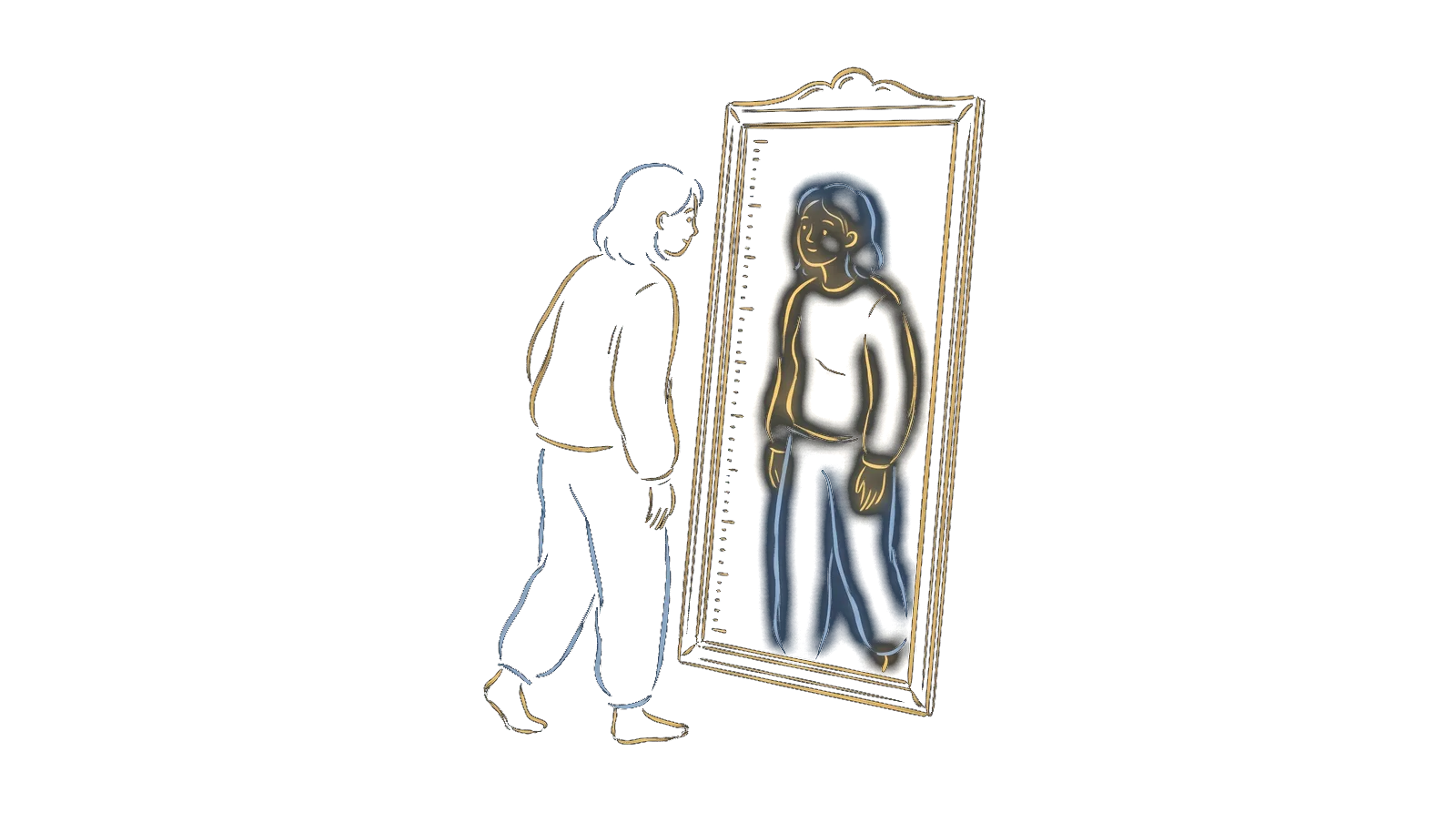
At the end, your profile places you against the 219 respondents from 2025 on 2 axes, prompting and helping. It puts you in one of 4 profiles: collaborative champion, lone champion, go-to person in the making or explorer.
Answers are anonymous: the questionnaire records neither your name nor your IP address. If you leave your email to receive the results, it is stored separately and never linked to your answers.
Anyone who already uses generative AI in their work can take part, whatever their job and the size of their company. Data collection closes on December 31, 2026, and the results will be published in late January 2027 on jessem.fr.
Be one of the 2026 respondents
The questionnaire takes 7 minutes and your answers stay anonymous. Your profile appears as soon as you answer the last question.
Take the 2026 surveyThe questionnaire is in French.
The study's limits
The sample doesn't represent the working population. It leans toward experience, with 70% aged 45 or older, and toward the extremes of company size: 38% large companies and 30% very small businesses.
The results describe links between variables, without establishing cause. A correlation of 0.52 between prompting and helping says the 2 go together. The direction of the link remains to be established.
The correlations cover the 217 respondents who use generative AI at work. I publish these limits alongside the numbers, on the method page: they're part of what you need to know before citing the study.