
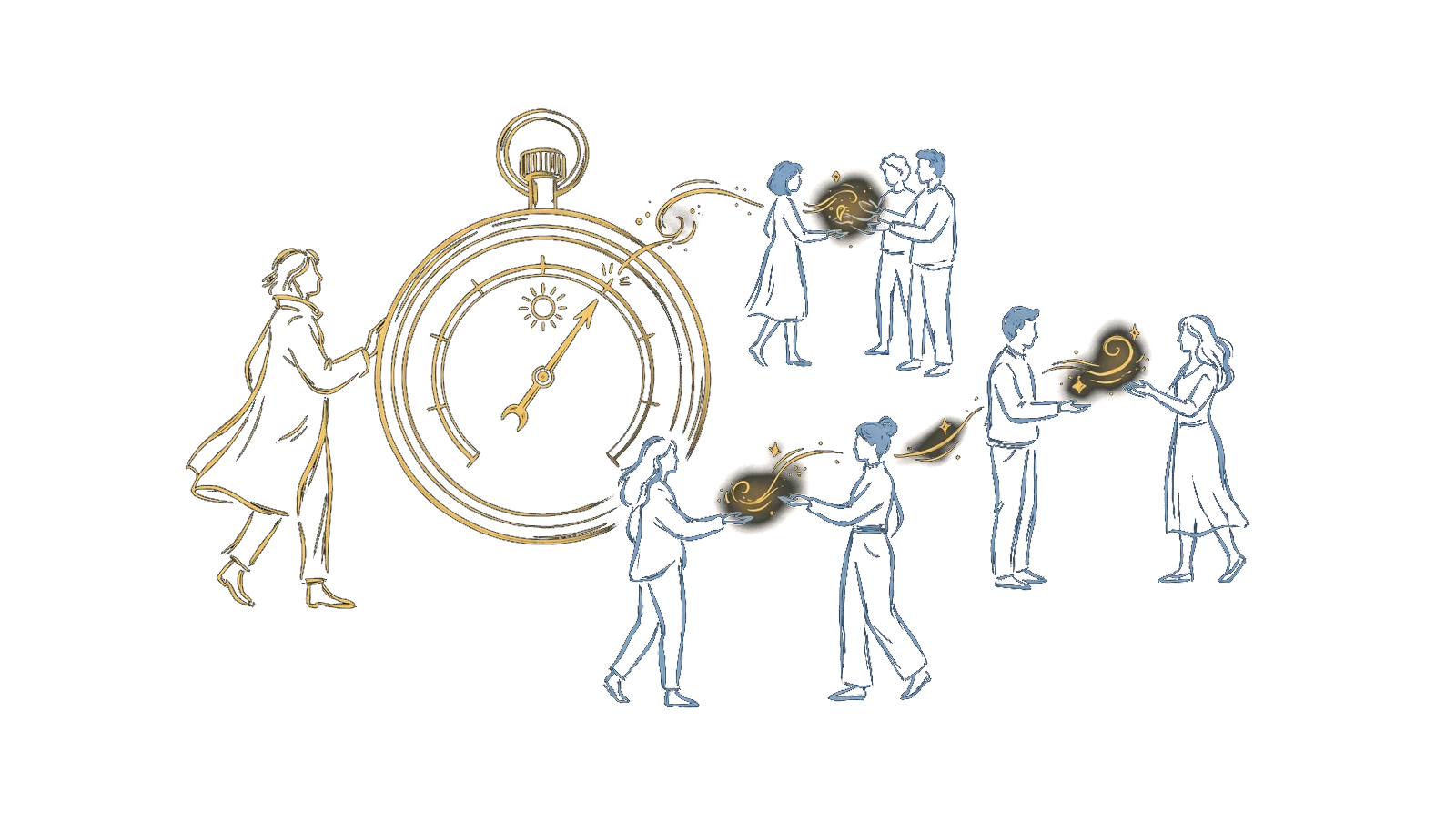
Experienced professionals who already use AI
219 professionals in France responded between June 2025 and January 2026. The panel leans toward experience: 70% are 45 or older. Large companies and very small businesses are both well represented, and AI use is already part of the routine: 43% use it every day.
Age
- 20 to 3414%
- 35 to 4418%
- 45 to 5438%
- 55 and older29%
Company size
- 1,000 or more38%
- Fewer than 1030%
- 10 to 24921%
- 250 to 99910%
Most represented industries
Uses of generative AI
Paradox 1: AI experts share more

Generative AI has a reputation for isolating people: everyone with their own prompts, shortcuts and methods. The 2025 responses describe advanced users who turn toward their colleagues. The better someone prompts, the more they spontaneously help colleagues and take initiative beyond their job description.
Link between prompting skill and behavior at work
Pearson correlations, axis from 0 to 0.6.
Among the top 25% in prompting skill
33 highly helpful10 individualists
Among the respondents most at ease with prompting, highly helpful profiles are 3.3 times as common as individualist ones. Lone champions exist, but they remain a minority.
Training people in AI is an investment in the team, wherever the organization allows it.
Paradox 2: the most cautious are the most skilled

Deliberately limiting what you share with AI is often seen as a brake on adoption. In the responses, the most advanced users are the ones who do it. Caution is a mark of professionalism: the people who understand the risks are also the ones who handle the tool best.
Average prompting skill score, by how much people deliberately limit the data they share
Paradox 3: hierarchy holds back the collective benefits of AI
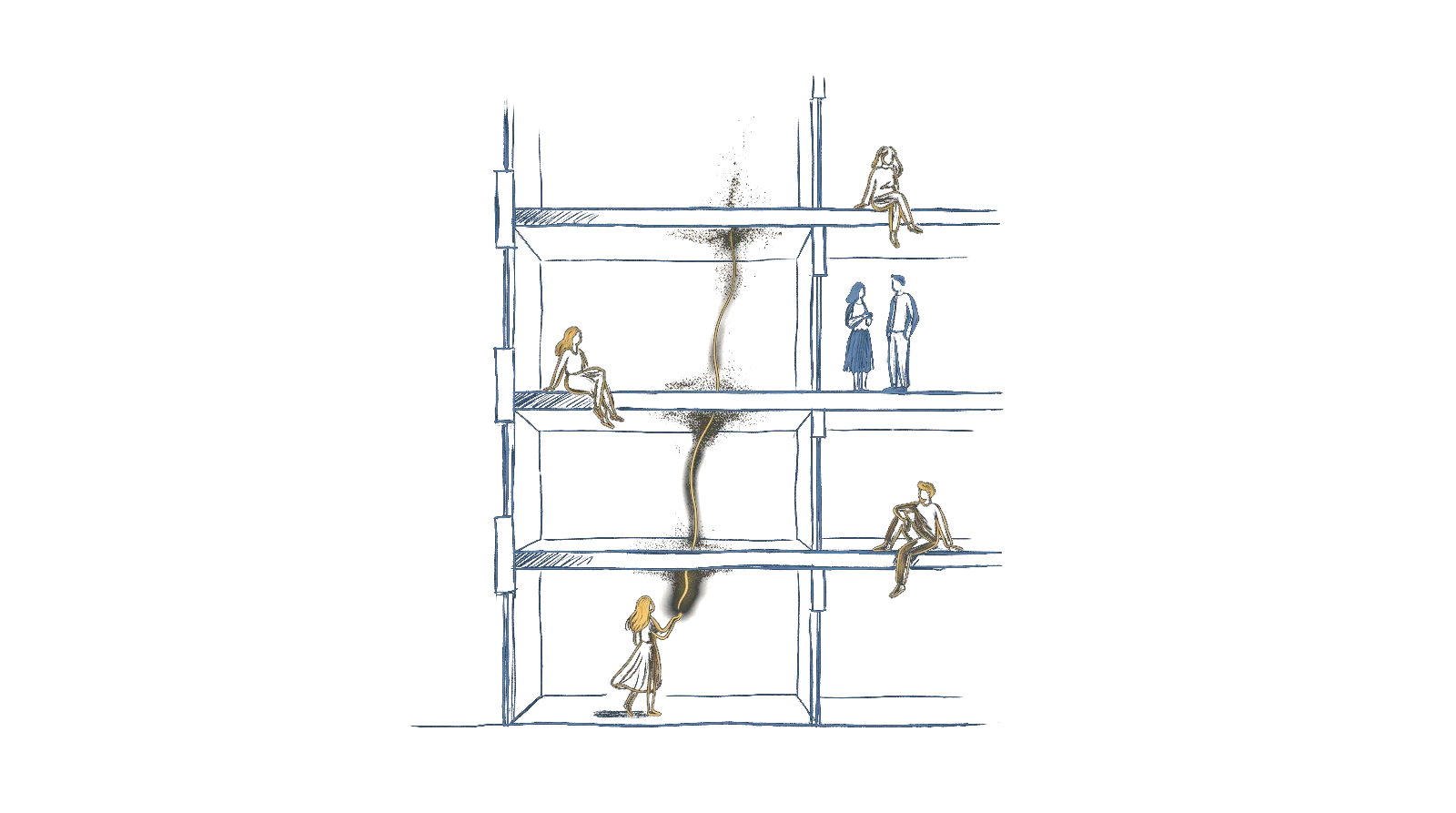
This is the study's main finding, and it is statistically significant. In workplaces seen as having little hierarchy, prompting skill goes hand in hand with helping colleagues. In the most hierarchical ones, that link becomes weak and loses statistical significance.
Choose a level of hierarchy
0.52strong link between prompting and helping
| Setting | Correlation | Significance | What it means |
|---|---|---|---|
| Low hierarchy | r = 0.52 | p < 0.001 | Skill benefits the whole team |
| Moderate hierarchy | r = 0.26 | p = 0.03 | The effect is there but weaker |
| High hierarchy | r = 0.14 | not significant | The gains stay individual |
In practice, training people without changing the culture keeps the gains at the individual level. New skills spread very little, and AI champions stay isolated: they become single points of failure for the whole team.
AI reveals an organization's culture. It amplifies what that culture already allows.
What drives everyday AI use
We modeled the factors that explain how often people use AI. Prompting skill weighs three times more than organizational support. Caution with data pulls in the opposite direction, though the link between caution and skill shown above still holds.
Weight of each factor in how often people use AI
The fastest lever is short, job-specific prompting training, with concrete use cases and a measurement before and after. That is where the data shows the strongest effect, as long as the organization improves the conditions around it at the same time.
Shadow AI grows where rules are missing

Shadow AI (unsanctioned use of personal tools or of sensitive data) is the symptom of an organizational gap. When the company sets no approved tools, no data rules and no clear responsibilities, employees adapt. They take risks, often without knowing it.
8.2% fit the potential shadow AI profile
Frequent use, low trust in the organization and few resources provided. One square per 1% of respondents.
Resources and trust
0.37
Correlation between the resources managers provide for using new technologies and trust in how AI risks are managed.
Trust follows when the organization visibly invests in tools, training and rules. Equipping teams is how you deal with shadow AI.
What the study teaches us
AI is an amplifier
A collaborative culture speeds up sharing. A hierarchical culture creates silos of expertise.
Prompting is a lever
It is the best predictor of AI use and of team behavior. Training people in prompting is an investment in the team.
Caution is a strength
The people most careful about privacy are also the most skilled. Governance and performance go together.
Management has to change
Without new sharing rituals or recognition for those who help others, the gains from AI stay individual and fragile.
The method
The study surveyed 219 professionals in France between June 2025 and January 2026. It was run by Jessy Martin (then with Pando Studio) and the Worklab, a Nantes-based consulting and training firm specializing in collaborative work, with Sacha Lopez, partner and facilitator. The questionnaire covered four dimensions, each measured on a scale of 1 to 7:
| Dimension | Items |
|---|---|
| Prompting skill | 4 |
| Citizenship behavior at work (helping, initiative, defending the organization, following rules, perseverance) | 5 |
| Perceived hierarchy and organizational support | 8 |
| Attitudes toward privacy | 3 |
The analysis relies on Pearson correlations, moderation tests (correlations compared with Fisher's Z) and a multiple linear regression. The correlations cover the 217 respondents who use generative AI at work.
The sample does not represent the working population as a whole: 70% are 45 or older, 38% work in large companies and 30% in very small businesses. The results describe links between variables, without establishing cause. The 2026 edition asks the same questions to track how the answers change.