A language model writes the most likely continuation. Without precise instructions, the most likely is the average of everything it has read.
What you go through4 pain points
What your readers notice4 signs
What you go through
Rewriting everything by hand
“Sounds like ChatGPT.”
Drafts · Launch post
post-final.docx
post-final-v2.docx
post-final-v3-reviewed.docx
post-final-v7-OK.docx
post-final-v11-really.docx
post-final-v12.docx
Redo
The text comes out clean but generic. You have to rework it line by line until it sounds like the brand.
Your brand brainClaude reads your editorial guidelines before writing: the first version starts from your tone, your real examples and your no-gos.
Explaining the guidelines again in every conversation
“We already fixed that.”
MondayReminder: we keep it formal and avoid jargon.
WednesdayReminder: we keep it formal and avoid jargon.
FridayReminder: we keep it formal and avoid jargon.
Already said
Every new conversation starts from scratch. Last week's corrections are lost.
Your brand brainYour rules live in files Claude rereads before every task. Every correction is kept automatically, in the right place: you never give it twice.
Off-brand visuals
“That corporate blue again…”
Your guidelines
What the AI delivered
Off brand
Approximate colors, a redrawn logo, random fonts: the visual can't go out as is.
Your brand brainColors, fonts and logos are stored in tokens.json. The control script flags any color outside the palette, with the gap measured.
Everyone on the team gets something different
Camille's version
Hugo's version
Léa's version
Inconsistent
Same brief, three tones, three palettes. The brand changes depending on who writes the prompt.
Your brand brainEveryone works from the same brand folder: every agent reads the same guidelines, and the code check verifies every piece.
What your readers notice
31%of consumers trust a brand less when its AI-generated content shows. Only 7% trust it more.Klaviyo, 2026 AI Consumer Trends, 8,000 consumers, France included, December 2025
Em dashes everywhere
Your brand — much more than a logo — is a promise. And that promise — as you know — is kept every day.
Blacklist
The most cited sign of generated text, in ChatGPT and Claude alike.
Your brand brainThe “—” is on the kit's blacklist. The control script flags it in every piece.
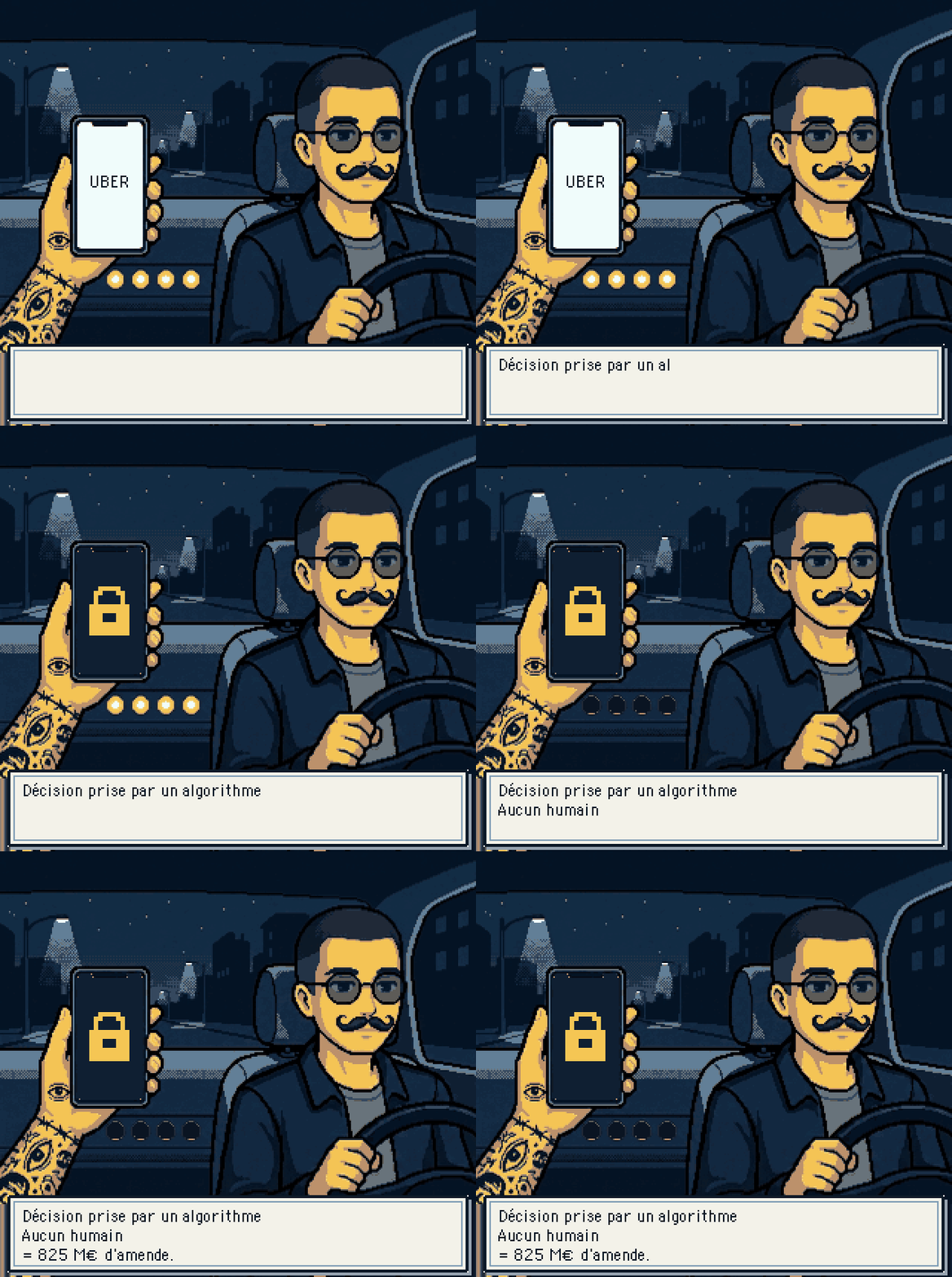
“It's not X. It's Y.”
It's not a tool. It's a revolution.
Blacklist
Fake depth that readers spot in a single line.
Your brand brainThe construction and its variants are on the kit's blacklist.
The emoji post
Expert GrowthAI consultant · 2h
Boost your visibility
Save a ton of time
Free your creativity
In short: these tools change the game.
What do you think?
Blacklist
Emoji bullet points, a schoolbook conclusion, a closing question: the grammar of the generated post.
Your brand brainYour guidelines ban emojis as bullet points and set the tone with your real texts.
The purple card with a colored border
Fast
Secure
Smart
Off brand
For designers it's almost as reliable a tell as the em dash is for text.
Your brand brainYour templates start from your approved designs, in your colors and with your corner radii.
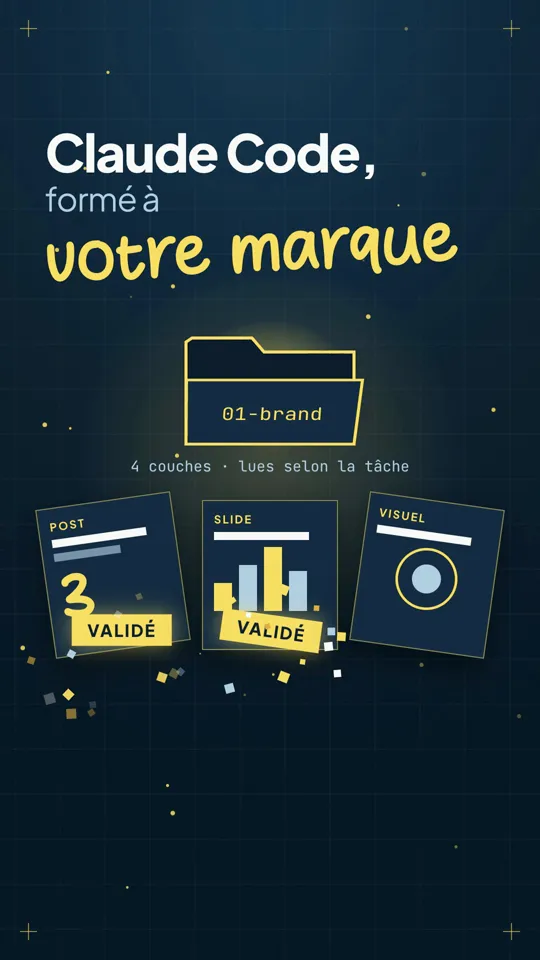
The brand brain in 3 steps
01-brand
CLAUDE.md
tokens.json
voice.md
anti-ai-writing-style.md
exemples-rejetes.md
droits.md
1
Encoded
Claude asks you one question at a time and stores your answers in files: guidelines, tone, audiences, no-gos, visuals.
TaskA LinkedIn carousel
Claude reads first
tokens.json
voice.md
anti-ai-writing-style.md
assets/index.md
2
Read for every task
Before a post, a slide or a visual, Claude opens the files that matter for that task.
controle-marque.py post.html
line 3 · color #1E5AA8 outside the palette
line 5 · banned word “revolutionize”
line 6 · empty field {{first_name}}
3 issues. Fix before delivery.
3
Checked before you see it
A script catches off-palette colors, banned words and forgotten fields. A skill reviews the tone, then you do.
Set it up once produce all your content
Once your brand brain is set up, you ask for a piece of content in one sentence. Claude produces it in line with your guidelines, whatever the format.
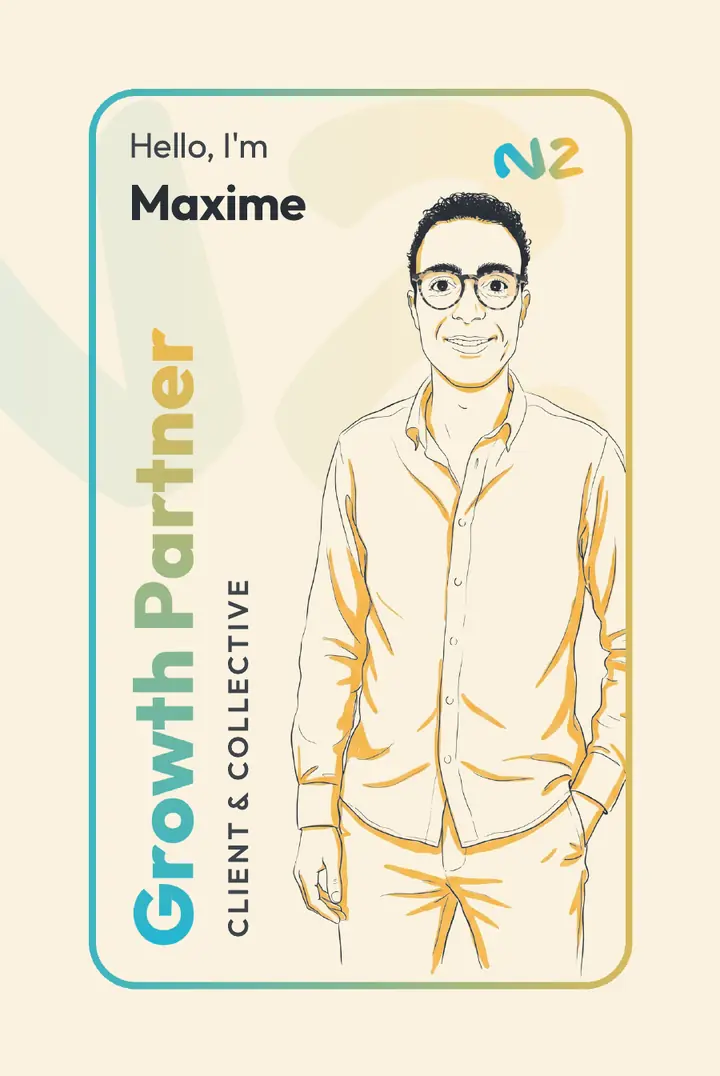
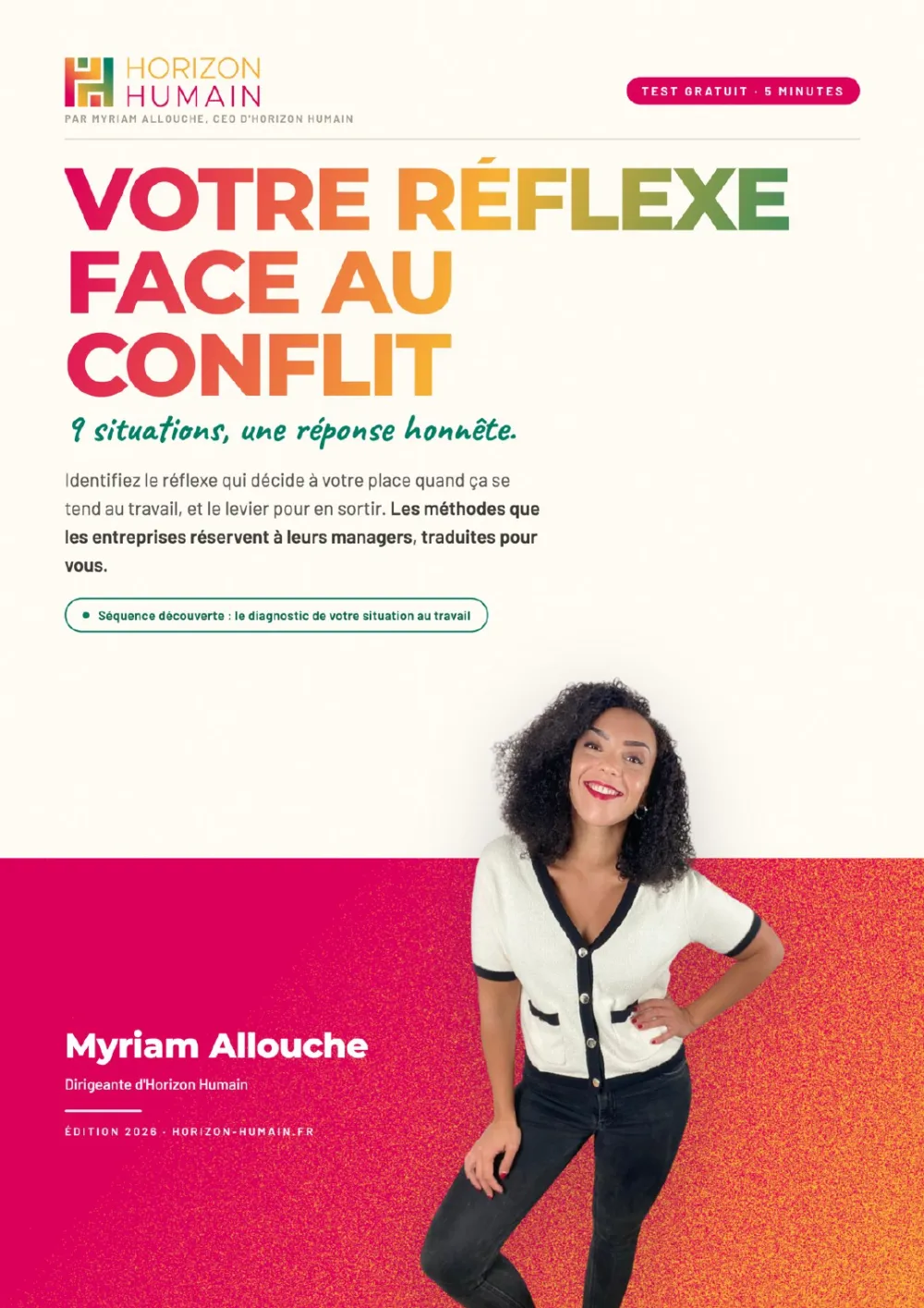
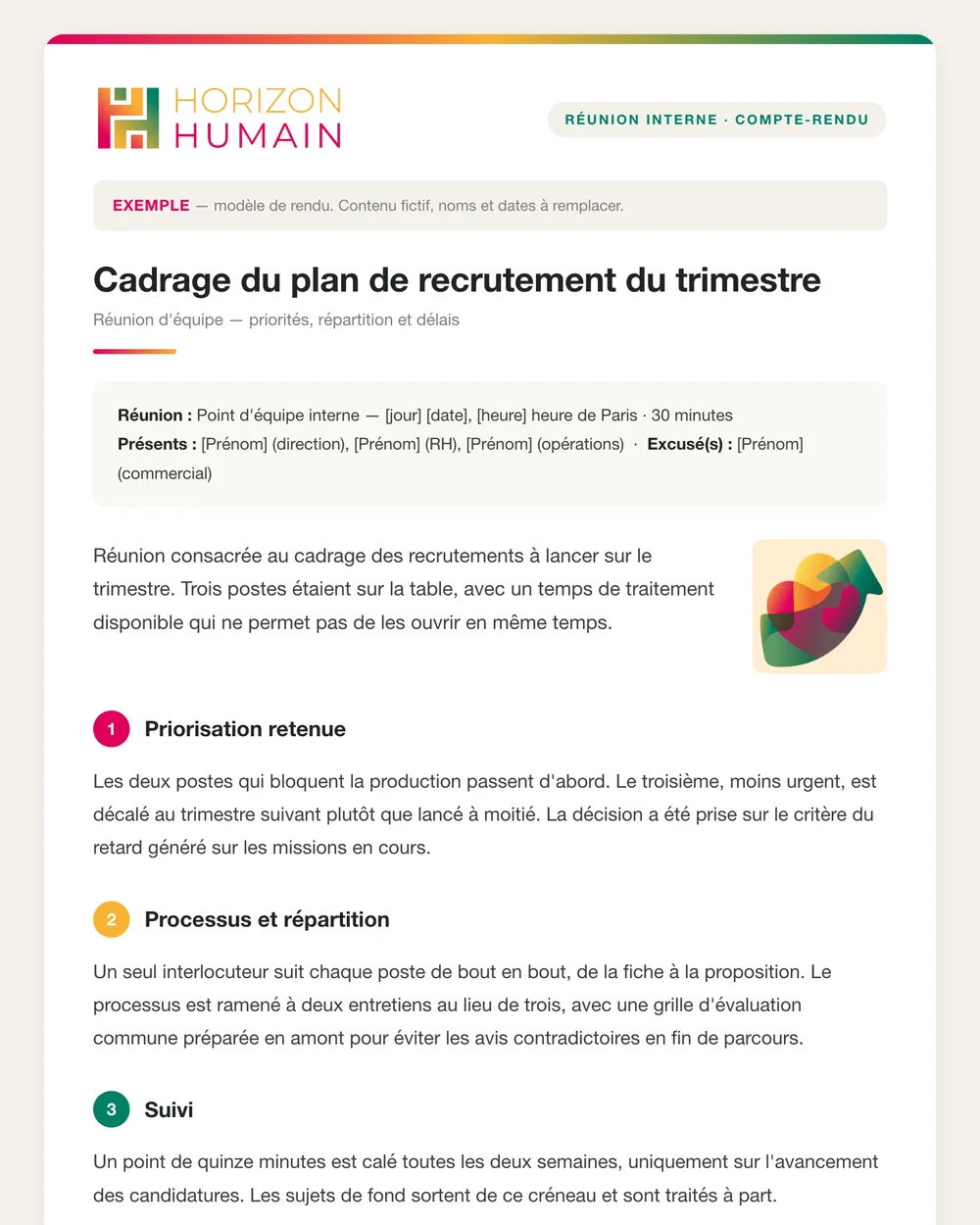
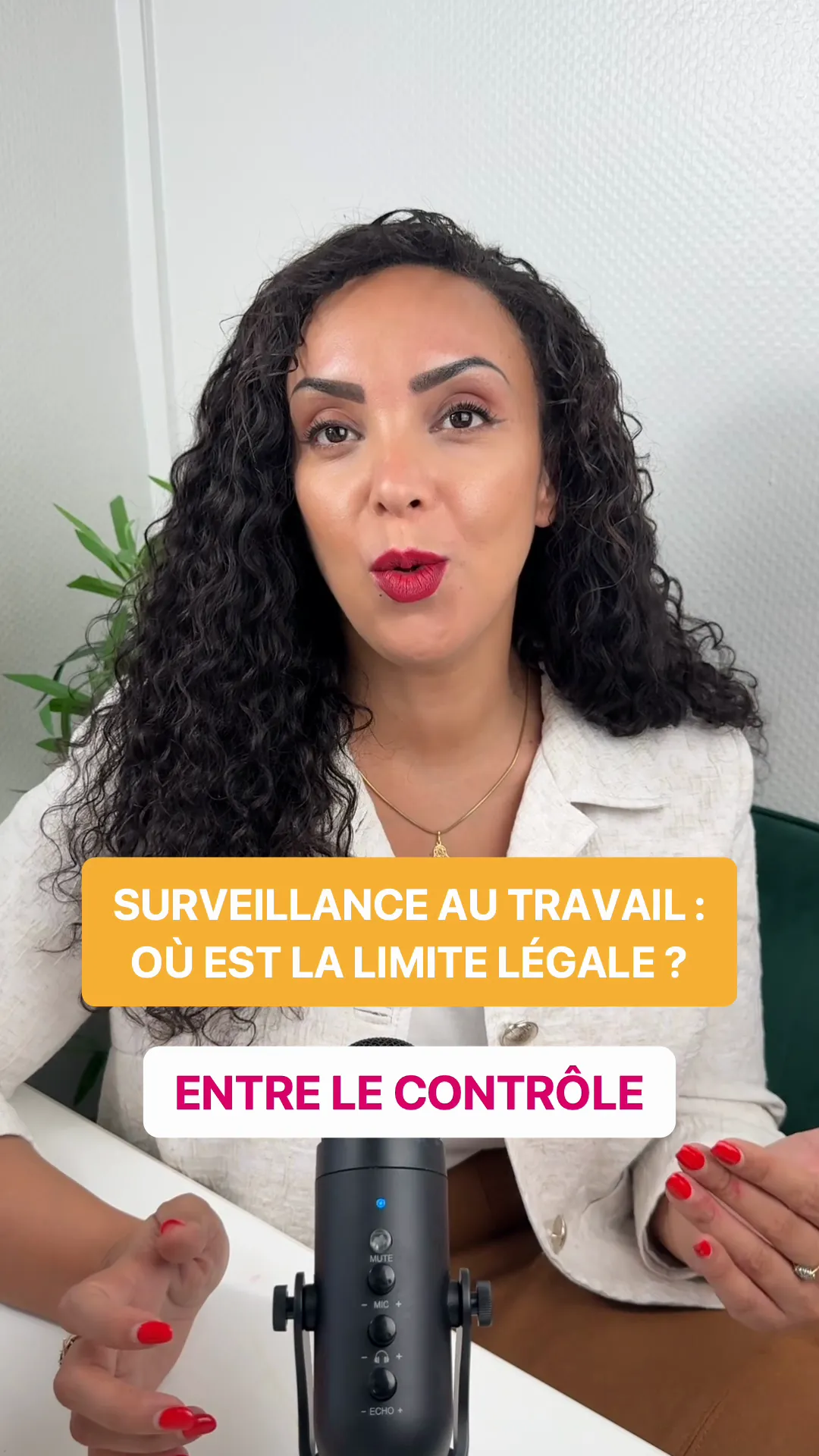
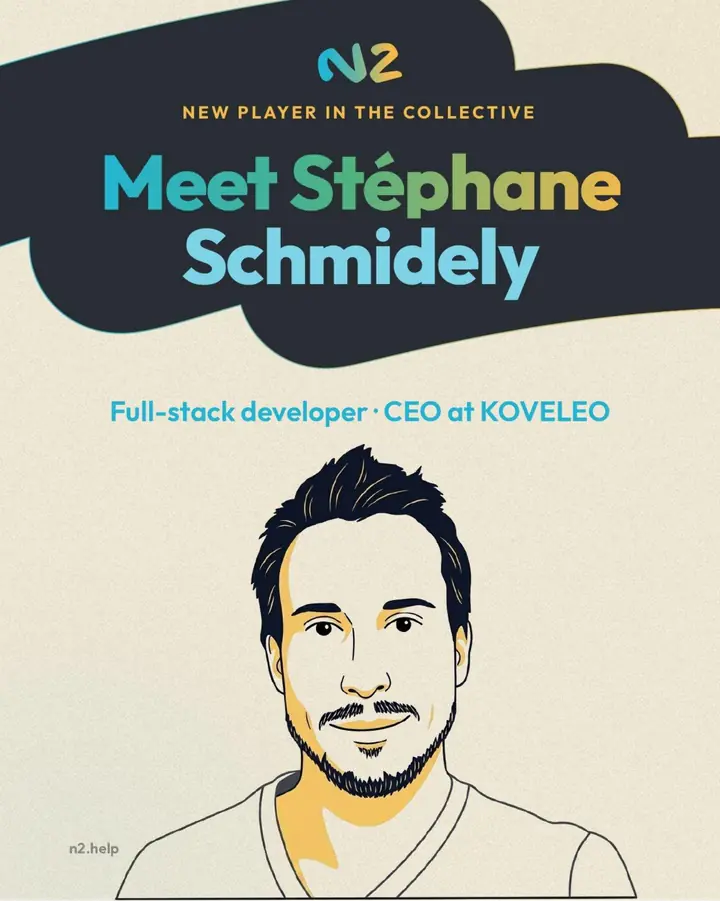
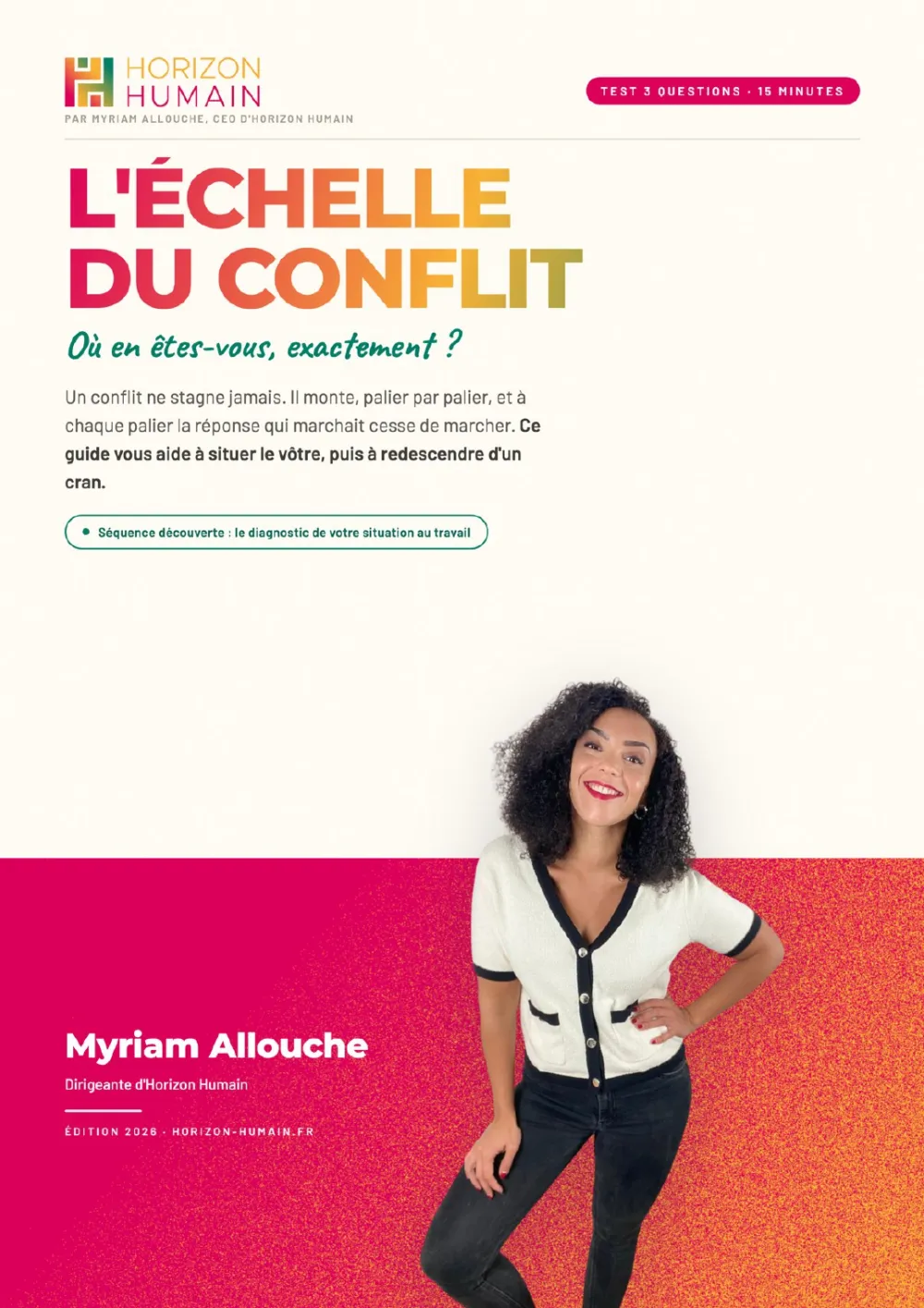
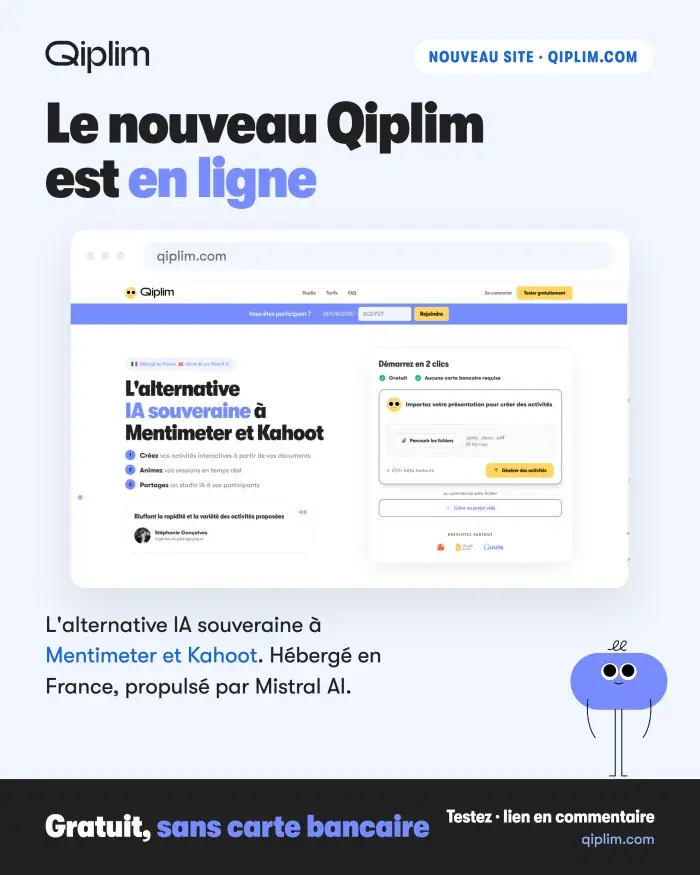
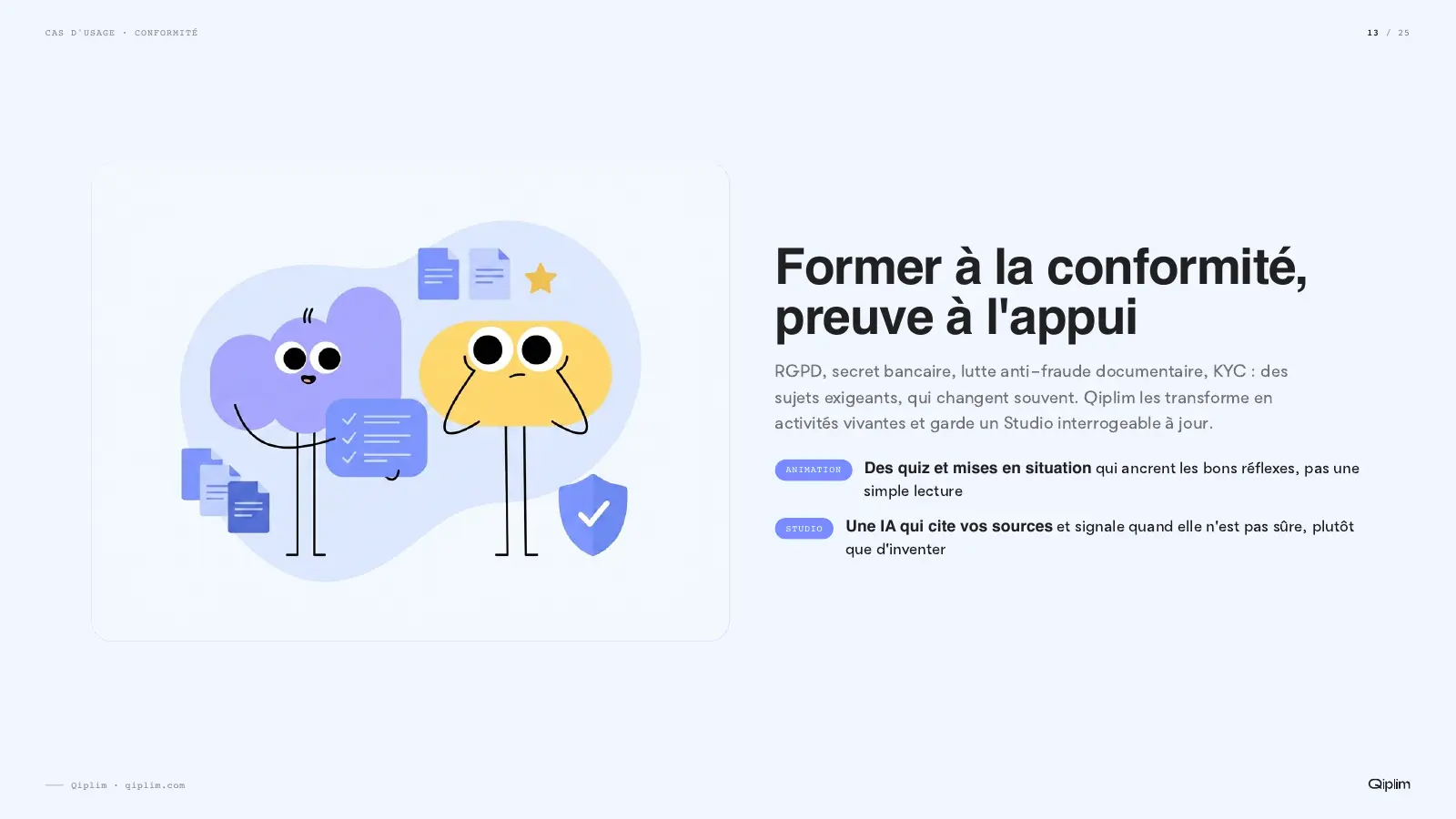
Business cardN2PDF guideHorizon HumainMeeting reportHorizon HumainInstagram reelHorizon HumainAnimated announcementQiplim
Business cardN2PDF guideHorizon HumainMeeting reportHorizon HumainInstagram reelHorizon HumainAnimated announcementQiplim
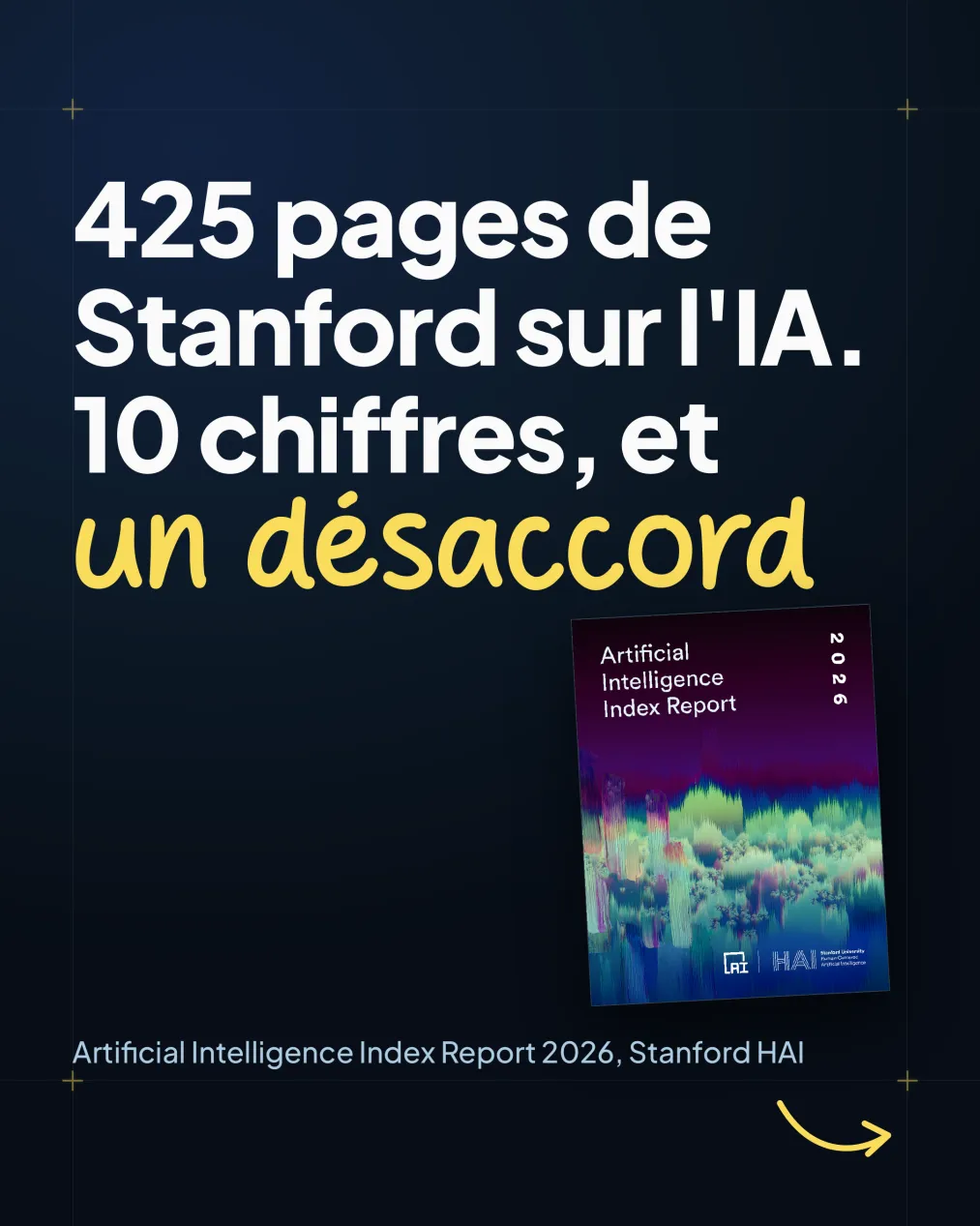
A carousel summarizing the 425 pages of Stanford's AI Index
What you can ask for
18-slide carouseljessem · on brand
Turn a post into a LinkedIn carouselCreate an on-brand quote cardPut together a client presentationWrite a landing pageWrite a complete article from a briefPrepare a newsletterLay out a PDF guideCreate a 15-second motion adIllustrate an articleWrite your LinkedIn posts
Turn a post into a LinkedIn carouselCreate an on-brand quote cardPut together a client presentationWrite a landing pageWrite a complete article from a briefPrepare a newsletterLay out a PDF guideCreate a 15-second motion adIllustrate an articleWrite your LinkedIn posts
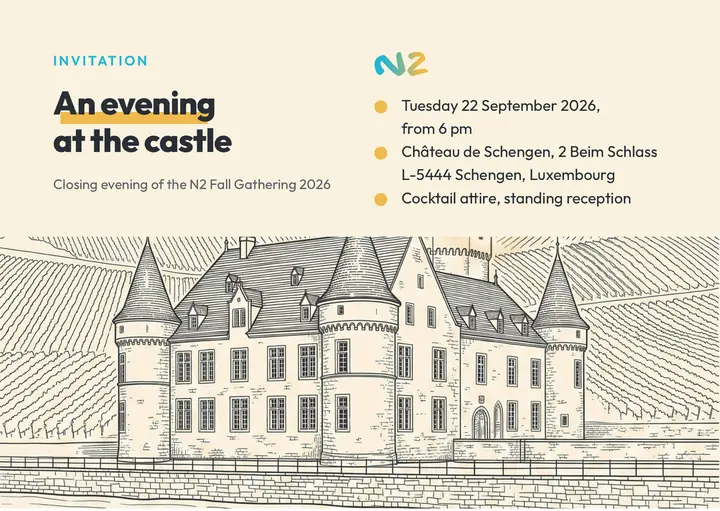
Print your business cardsPut together an event bookletDesign a labelPrepare an invitation cardDesign a signProduce a project portfolioProduce an animated GIFAnimate a loading screenRoll out a template as a seriesSubtitle a video
Print your business cardsPut together an event bookletDesign a labelPrepare an invitation cardDesign a signProduce a project portfolioProduce an animated GIFAnimate a loading screenRoll out a template as a seriesSubtitle a video
Check your colors before publishingKeep your blacklisted words outWrite an on-brand meeting reportWrite a welcome emailKeep the brand's tone on every channelMake your visuals easy to findTrack the rights to your imagesWrite a press releasePrepare an editorial planHand your guidelines over to a colleague
Check your colors before publishingKeep your blacklisted words outWrite an on-brand meeting reportWrite a welcome emailKeep the brand's tone on every channelMake your visuals easy to findTrack the rights to your imagesWrite a press releasePrepare an editorial planHand your guidelines over to a colleague
Switch agents whenever you want
We start with Claude. Your brand brain remains a folder of files that belongs to you and that other agents can read.
Open filesText, JSON and images. A human reads them as easily as a machine does.
On your computerThe folder lives on your computer. Claude reads it for the duration of a task and the reference version stays with you.
Ready for CodexOpenAI's Codex reads the same skills format, and the kit includes an AGENTS.md file for it.
Roziya ShirmatovaMarketing and communications officer, Horizon Humain
Myriam and Roziya describe what changedHorizon Humain · 3 min 44 s video in French
Since the first session, I've used Claude every day. It's changed my working life. Claude translated my website into English and wrote the code for it. For a trade show report, I gave it my meeting notes and photos of the business cards: it did all the work. What I used to send my client by email now becomes a clean presentation, almost every day. Jessy's availability and patience are incredible. We had him repeat the same thing 10 times, and he never got annoyed. Anyone who takes this training is lucky.
A few hours instead of a full day
I come from finance, and I'm not a tech person. Jessy takes the time, with great teaching skill and a smile that never leaves his face, and he opened up our sense of what's possible. After the opening session, I created my first skill. I was so proud, and I used it all week. I hand over some internal documents and a few pointers: programs that would have taken me a good day each are done in a few hours. A 4-minute testimonial became a 30-second post in half an hour. Real confidence is building: the more I use Claude, the more comfortable I am steering my teams toward it.
I had a long way to go with AI. Today, I prepare for my prospect meetings with Claude: the client profile with the questions to ask, then a presentation of my offer tailored to each prospect. When I walk out of the meeting, I have the summary. A mind-blowing time saver, and an energy saver too. Jessy also passed on a mindset. When you're starting out, you're afraid to try things. He tells us: go for it.
At first, my team mostly used AI to write emails. Today, every Monday morning, a routine sends my team “Le radar de la parfumerie” [the fragrance radar], a market-watch newsletter with links and ideas. My Excel dashboard became an animated interface, clean and smooth, which I showed to senior management. For a fragrance launch, I replaced the info-heavy internal email with an interactive page, section by section. I shared what I learned with my team: they were blown away. It's so vast that I see this training as a first step, and I can't wait to keep going.
I'm saying this as a former marketing professor: Jessy has very strong teaching skills and is clear to every audience, technical or not. He shows very concrete examples, and his goal is for us to become independent. He pushes us to do better. During the training, I set up a market watch that sends me communication ideas every Monday, ranked by priority, for my husband's photography business. Claude built it on its own, from the context and the result I wanted. I also turned my LinkedIn exports into a dashboard of my performance.
At the first class, it was all brand new, and I felt lost. Now I actually enjoy it. With Claude, I set up a monthly roundup of the optical trade press and the schedule of reminder emails for our tour. I built the 2027 brand guidelines from the 2026 ones, with graphic elements for my banners and invitations. It saves me quite a bit of time. And the agent that will suggest LinkedIn posts for me to approve is really great for me.
I learned a lot. At first, I followed the steps to the letter without really understanding, and that bothered me. I went back over everything I didn't understand, approaching it differently, and it's going better. Today, every Monday, I get a 5-point market watch by email, with a link to a page in the brand's colors that shows trends by region. For a new client, one sentence is enough: Claude creates the folder with all the agents. I've built lots of routines, and they work really well.
30 min instead of 3 h
Before, all I knew how to do was write a prompt. Today I produce landing pages, guidebooks, carousels and presentations. The slides for our last masterclass took me 30 minutes, compared with 3 hours before. For our videos, I went from 1 video in 30 minutes to 5 videos in the same time. I even automated our meeting summaries: Claude picks up the transcript, writes the summary in our brand style and sends it to the whole team, without me having to ask. Claude is part of the team now.
My use of AI was basic: chat, ChatGPT or Gemini. The turning point came when we went beyond chatting with an LLM. Today, Claude pulls the information I give it access to from my own computer, without me having to send my data again. I built a folder structure, and Claude turned it into a knowledge structure with agents at every level. It takes an investment of time. Once it's done, there is time to be saved, that's certain.
What's in the program
1
The theory
Why your AI content all looks the same, what an AI agent is, and how to control it with code: every piece checked, without exception.
19 min
2
A concrete example
The 4 layers filled in for a real client, its code check in action, and what comes out of them.
12 min
3
The foundations
You install the kit in 5 moves and drop in your documents. Claude leads the first 4 steps: it sorts, files and writes, you approve.
13 min
4
Assets and templates
Visuals you can find without opening them, an illustration and a template built live on a real client folder, and who checks what.
15 min
5
Going further
The agents to plug into your brand brain, then images, videos, presentations, articles: what it makes possible next.
11 min
The module slides (in French), in this site's brand style.
1
The inventory
What exists, what's missing, what contradicts itself.
20 min
2
Identity and audiences
Who the brand is, what it promises, who it speaks to.
30 min
3
Tone and blacklist
Your way of writing, with real examples, and what you refuse.
30 min
4
The tokens
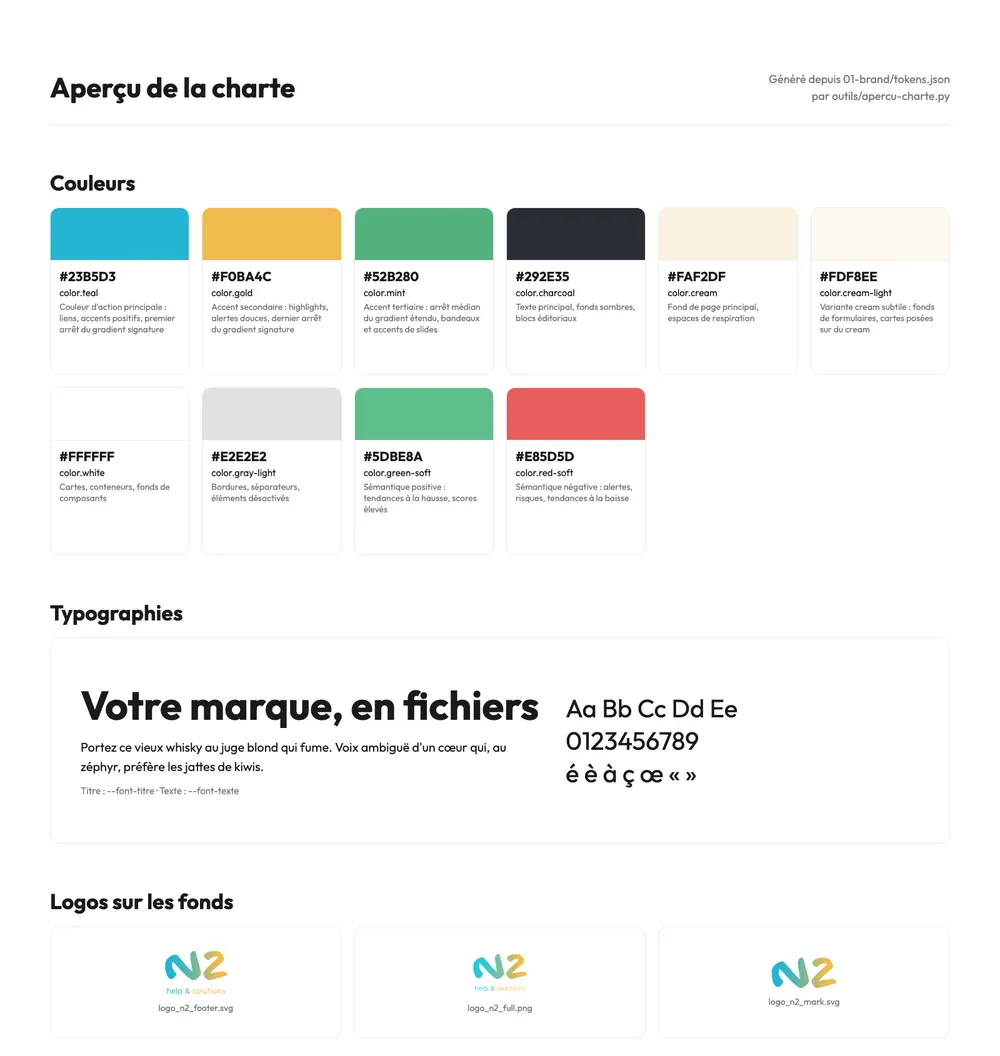
Colors, fonts and logo, checked by eye on a brand guidelines preview.
30 min
5
Assets and rights
Visuals you can find without opening them, and what you're allowed to publish.
30 min
6
The first template
A Canva post or a slide becomes a template, rolled out 3 times.
30 min
7
Going live
A real piece of content, checked, and a folder ready for everyday use.
20 min
Step 4: N2's brand guidelines preview, generated by the kitStep 6: one template, three N2 business cards
The kit installed in 5 moves
One folder to open in the Claude app, Code tab. Then Claude asks you its questions one at a time.
1Unzip the kit
2Drop your documents into _depot
3Open Claude, Code tab, and pick the kit folder
4Under the input box, set permissions to “Auto”
5Type “On commence” (the kit is in French)
Your filesNew session
cerveau-de-marque-kit.zip
cerveau-de-marque/
_depot/
01-brand/
02-gabarits/
03-productions/
outils/
cerveau-de-marque/
_depot/
charte.pdf
logo.svg
posts-publiés.docx
01-brand/
02-gabarits/
03-productions/
outils/
charte.pdflogo.svgposts-publiés.docx
Create
Search
Artifacts
Scheduled tasks
Customize
Pinned ▸
Today ▸
YYou · Pro
mes-projets✓
site-web
cerveau-de-marque✓
Choose an environment ⌄
Permissions · this session
AutoClaude handles permission decisions✓
ManualAlways ask before making changes✓
Accept editsAccept all edits automatically
PlanMake a plan before making changes
On commence
Bienvenue. Claude welcomes you in French: 7 steps, about 3 hours. You answer and approve, it writes every file. Step 1: it reads your documents.
+
Describe a task or ask a question.On commence
mes-projetscerveau-de-marqueWorktreeManualAuto
Who this workshop is for
It's for you if
You produce content for a brand, your own or your clients'.
You spend time correcting what AI gives you.
You want the whole team to produce in line with the same guidelines.
What you'll need
A paid Claude subscriptionPro, Max, Team or Enterprise, for the Code tab of the app.
About 3 hoursfor the kit, in several sittings. Claude picks up where you left off.
Your brand documentsguidelines, logos, fonts and a few approved pieces of content.
I first built these systems for myself
I was running marketing for several brands at the same time and could no longer keep up. I needed a team I didn't have.
Today I produce on my own as if I already had that team, without working longer hours. Everything you've seen above comes from these methods. The workshop gives them to you.
Marketing and AI consultant and trainer, based in Nantes
+100employees supported in 2025
18+clients since 2022
+200 hof AI facilitation since 2023
Ambassadorof Osez l'IA, France's national plan for AI adoption
ActivatorFrance Num, the French government's digital transition network
Affiliate professorClermont School of Business since 2020
CertifiedGoogle Generative AI Leader
Join the workshop
Free until December 31 with La Collab
La Collab, a partner of Jessy Martin, brings together more than 3,500 freelance experts in marketing, communication and digital. A collective company from the French social and solidarity economy [économie sociale et solidaire, ESS] founded in 2015, it has worked for 600 client companies. Until December 31, it offers you this video workshop: sign up on its website (in French) and get your access code.
The brand brain
€120
single workshop, updates included
€120€0
free with La Collab until December 31
5 video modules of 11 to 19 minutes
The 7-step kit, ready to open in Claude
4 skills, the brand check on every write and a memory of your corrections
A sample template you can roll out with one command
A prompt is forgotten by the next conversation. Your brand brain stays in files the agent rereads before every task: your colors, your tone, your no-gos and your templates. Then a script, run on every write, checks every piece.
Yes, that's module 1: the 5 parts of an AI agent, and why a rule written in a prompt can't hold it on its own. You'll see how to control it with code: a hook reruns the brand check on every write, and anything measurable (colors, banned words, forgotten fields) passes that check every time, without exception. Tone and substance stay with your review.
A paid subscription: Pro, Max, Team or Enterprise. The workshop takes place in the Code tab of the Claude app, which isn't available in the free version.
Yes. Claude writes every file for you: it asks one question at a time, in French, then has you approve each file. The kit's tools are authorized in advance: Claude runs them for you.
About 3 hours for the kit, in several sittings, plus 5 video modules of 11 to 19 minutes. Each time you come back, Claude picks up where you left off.
Yes. Your brand brain is a folder on your computer. Claude reads your files for the duration of a task; the reference version stays with you.
The brand brain is made of text files. OpenAI's Codex reads the same skills format, and the kit includes an AGENTS.md file for it.
Get started with Claude for €0
The course I give the professionals I work with: videos to get started with Claude, ready-to-copy skills, starter files and a selection of AI tools.
So we only send you what is relevant, you are…
It's on its way
Your access to the course is arriving by email. Remember to confirm your sign-up to unlock everything.